
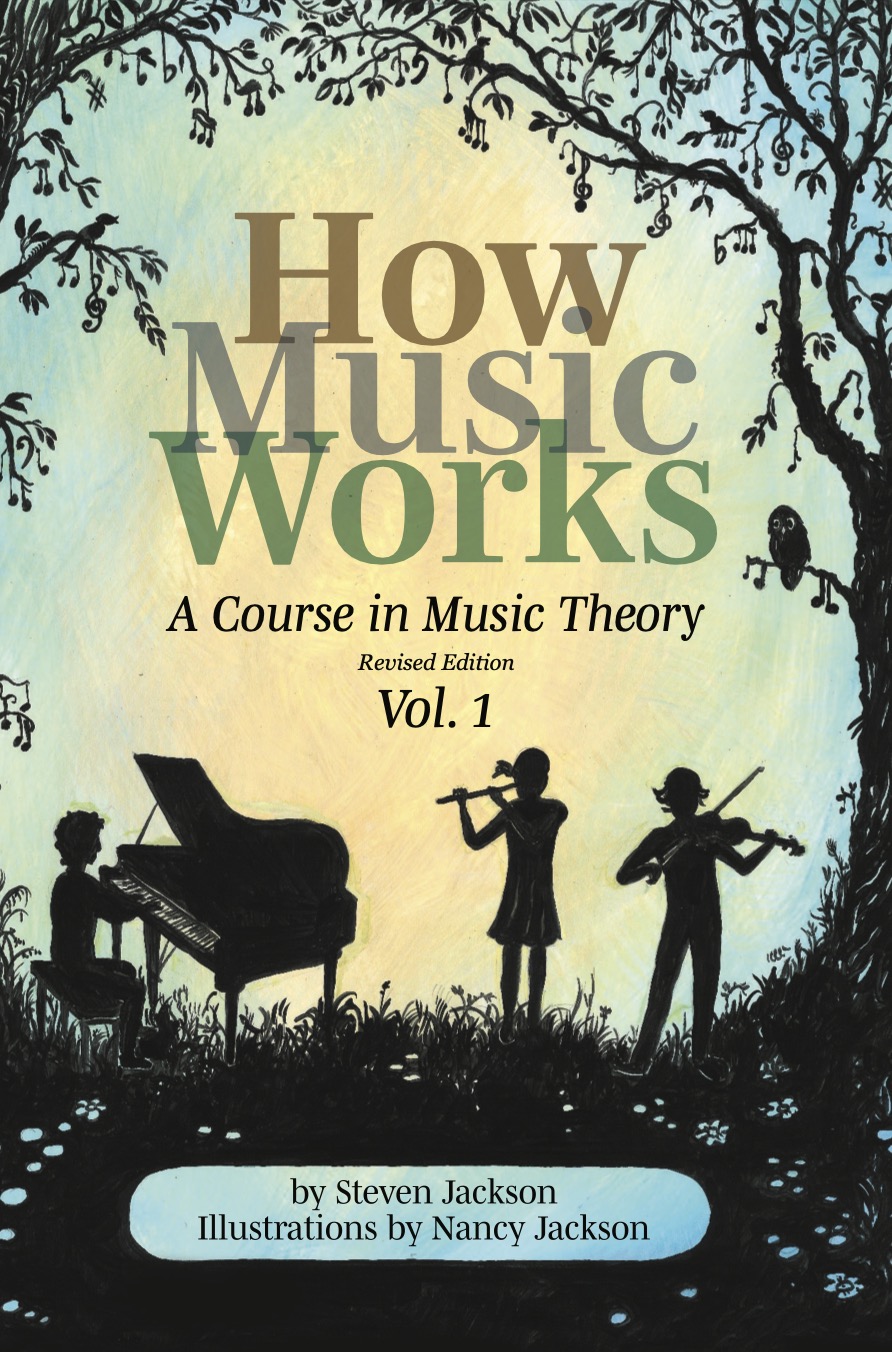
A fun, richly illustrated course for children and curious readers of all ages. Volume 1 focuses on rhythm and melody. Note values, time signatures, key signatures, clefs, scales, intervals are playfully and carefully discussed in a way that requires no previous knowledge of music. At each step, exercises assure reader comprehension while pieces for singing and clapping apply new skills to real music-making.
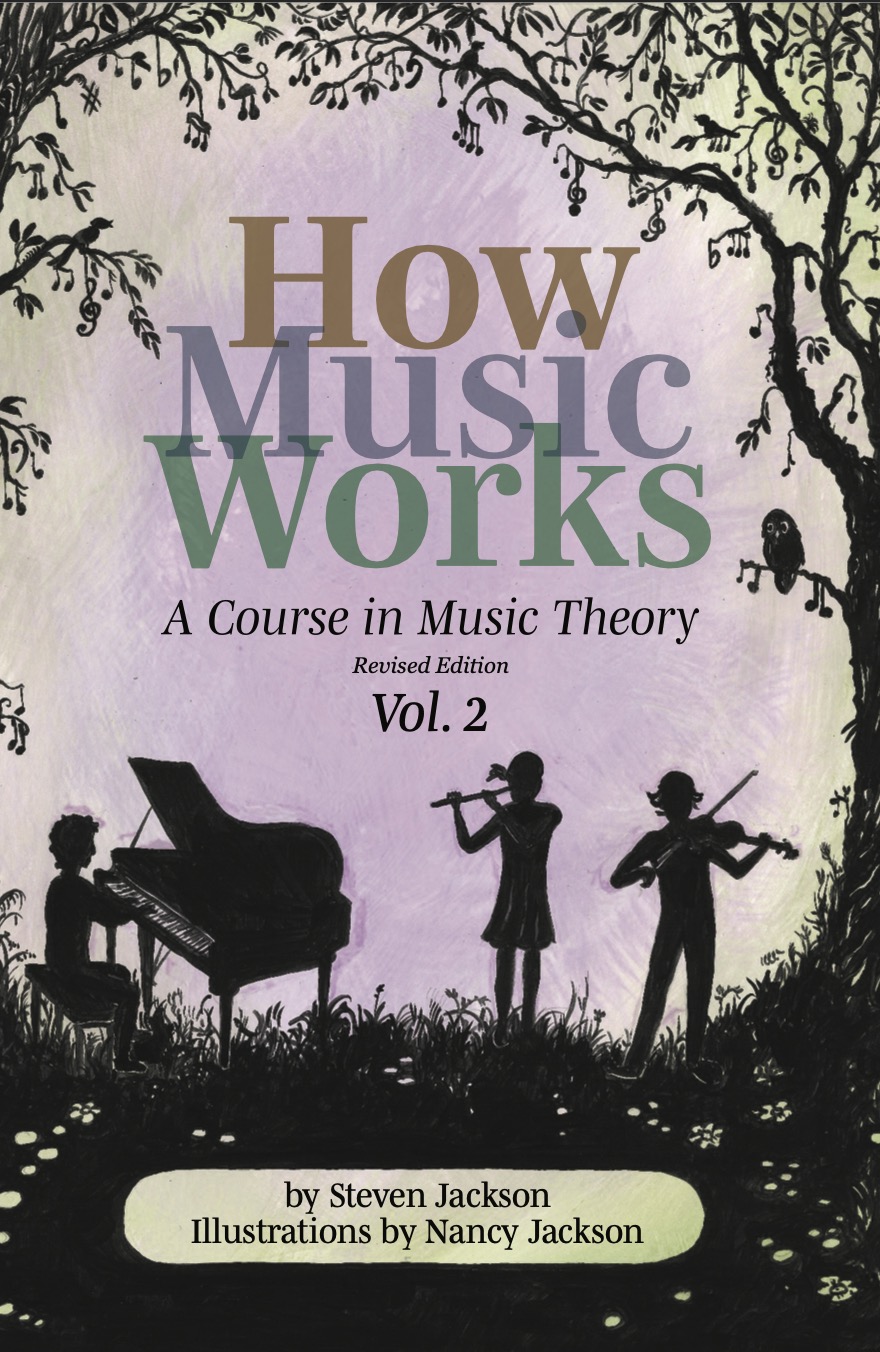
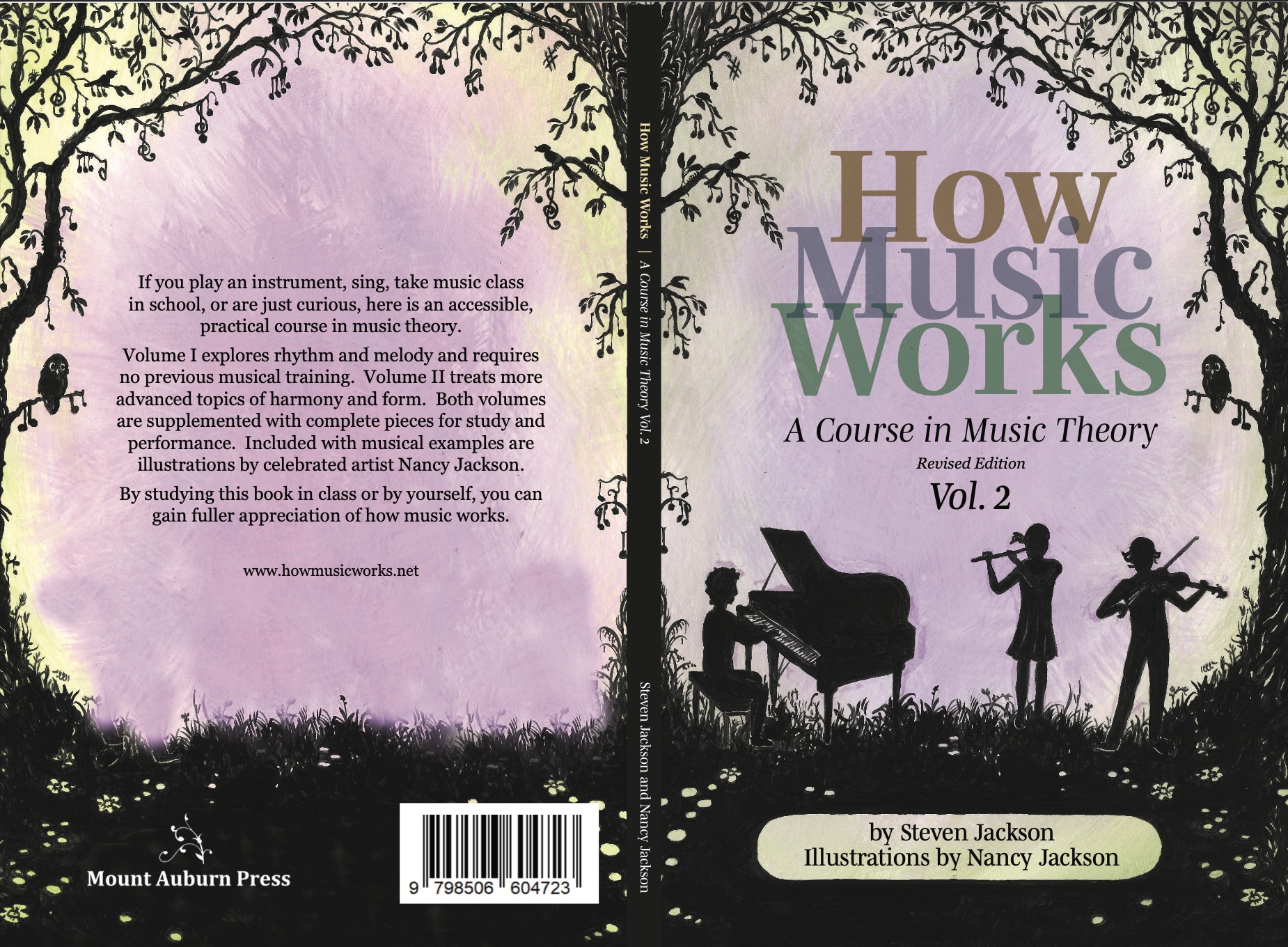
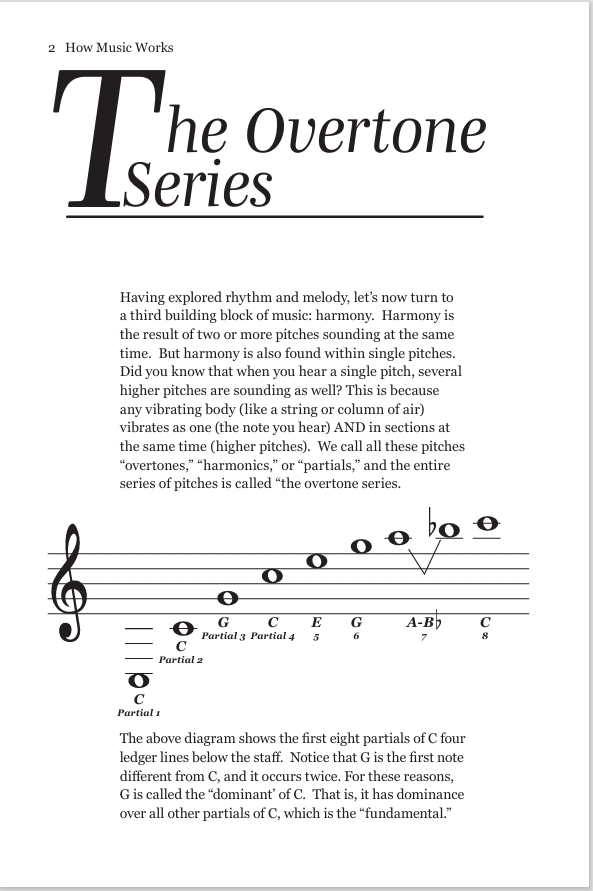
Volume 2 focuses on more advanced topics of harmony and form. Chords, the harmonic series, transcription, figured bass, and Bach chorales are made accessible and fun. A famous classical sonata is used to explore musical form in depth. Numerous exercises and performance pieces for solo or ensemble will challenge and engage readers to not only learn about music, but hear it and play it. You may even be inspired to write your own!
Do you want a simple guide to melodies, rhythms, chords, and how music is put together? Do you want to read music by sight, master an instrument faster, or write music of your own?
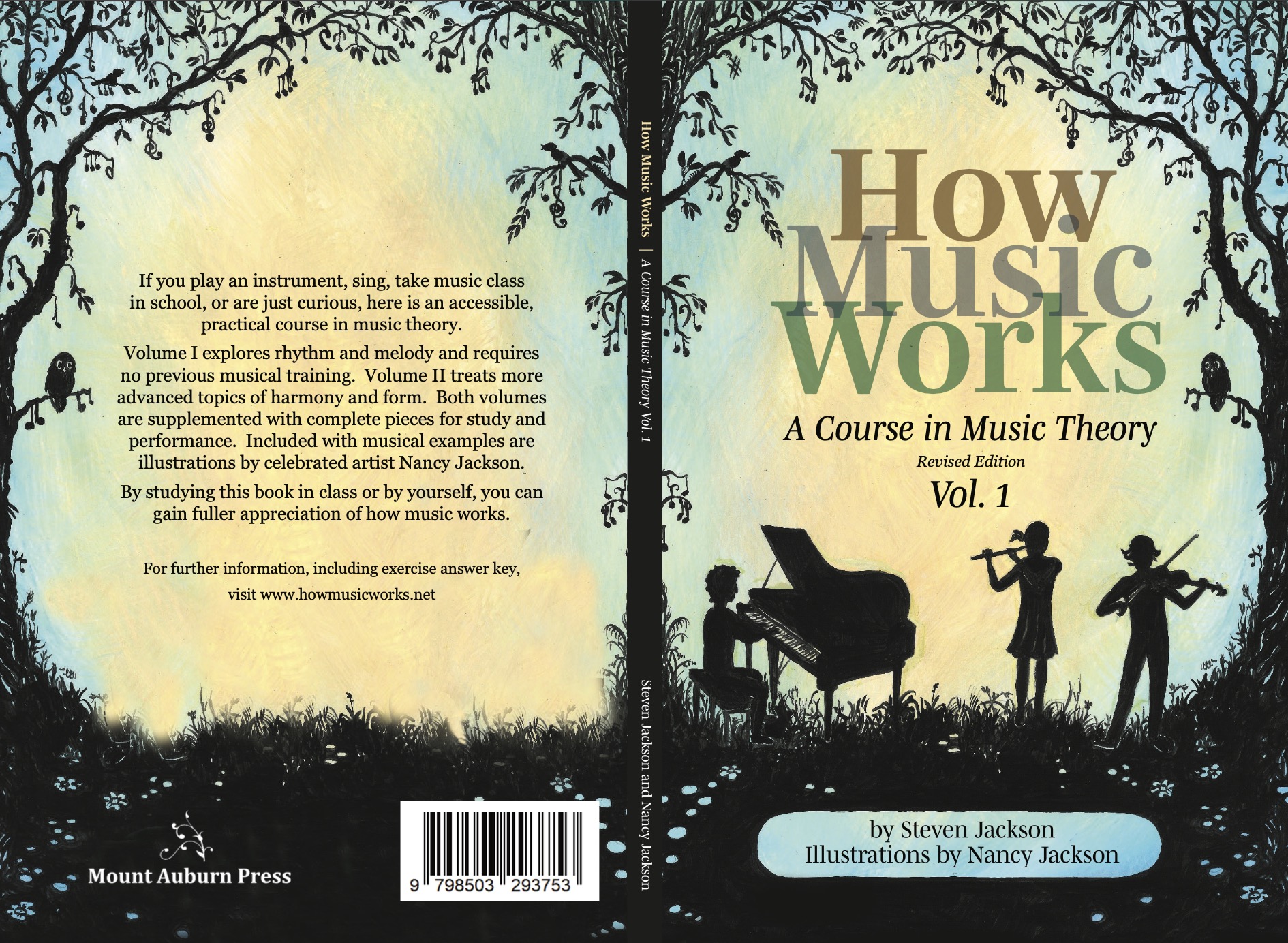
How Music Works is a fun, richly illustrated course in music theory for children and curious readers of any age. No prior knowledge of music is required. In volume 1 (ages 7 +), playful illustrations and exercises guide you to:
Volume 2 (ages 11 +), sold separately, continues with more advanced topics of harmony and musical form. How Music Works moves at a careful pace developed and tested in actual theory classes for student comprehension. Each chapter ends with exercises that apply new information and skills, ensuring steady progress. Ensemble pieces YOU perform are included that apply new theory skills to real music at every step. Responding to reader feedback, How Music Works is now in its expanded 2nd Edition with enlarged musical text for ease of use. No reader is left behind! Soon you will read and play music by sight, understand rhythms, registers, tone color, chords, musical forms, and how they all work together in music of others and your own! The author draws upon four decades as a classical music teacher and performer.
Whether you play an instrument, sing, take music classes, or are just curious, you will enjoy learning how music works!
"...very clever and fun at guiding readers through topics that are boring and confusing in other texts. Bravo!"
Cynthia Price-Glynn, Professor of Harp - Boston Conservatory of Music
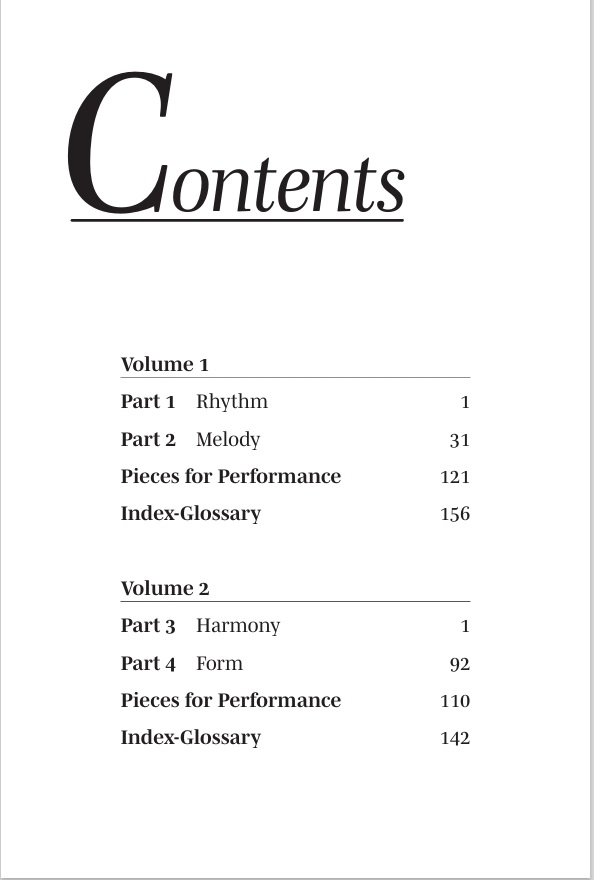
Answers to exercise groups 1 through 23 of How Music Works - A Course in Music Theory, Volume 1. Where multiple correct answers are possible (such as exercises requiring original composition), sample answers are provided. Exercises requiring singing or playing are not included.
Answers to exercise groups 24 through 38 of How Music Works - A Course in Music Theory, Volume 2. Solutions to six transcription studies (pp. 81-90) are also included. Where multiple correct answers are possible (such as exercises requiring original composition), sample answers are provided. Exercises requiring singing or playing are not included.
Due to publishing error, copies of How Music Works-Volume 1 sold before August 2022 may be missing three pages of We Like Ice Cream!, a rhythm study for three voices. The complete score, including the missing pages, can be downloaded here.